The FIBA Africa Mini-Basketball Forum heads to Comoros from July 26-29, bringing together 400 children and 70 coaches for four days of learning, fun and development. The initiative aims to strengthen grassroots basketball, promote inclusion and equip coaches with modern teaching methods that will benefit thousands of young players across Africa.
Last Updated on
July 20, 2026
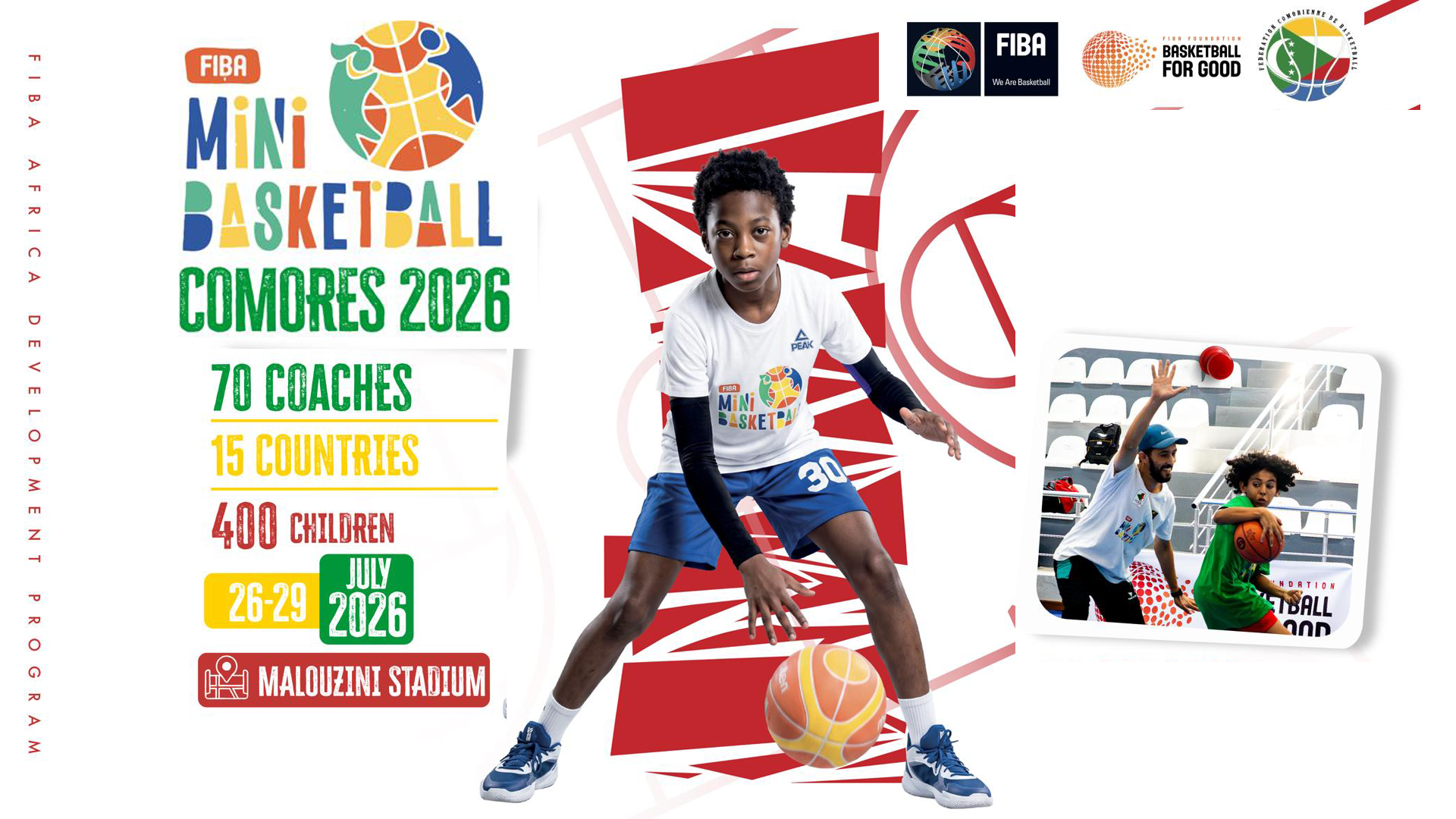
Comoros is preparing to take center stage in African basketball development as it hosts the FIBA Africa Mini-Basketball Forum from July 26-29, 2026, an event that promises to inspire hundreds of children while strengthening grassroots basketball across the continent.
Organized by the FIBA Regional Office for Africa with the support of the FIBA Foundation, the four-day forum is much more than a basketball gathering. It represents an investment in Africa’s future by introducing young children to the sport in an enjoyable and educational environment while providing coaches with the knowledge needed to nurture tomorrow’s stars.
But what if the next African basketball icon picks up a basketball for the very first time during this forum? What if one inspiring coach returns home with new teaching methods that transform an entire community’s youth program? These are the possibilities that make initiatives like the Mini-Basketball Forum so significant. The event builds on the success of previous editions held in Burkina Faso in 2019, Côte d’Ivoire in 2021 and other recent forums across Africa. Each gathering has demonstrated that developing basketball starts long before elite competitions or professional leagues. It begins with creating memorable first experiences for children, encouraging them to enjoy the game while developing confidence, friendships and healthy lifestyles.
This year’s edition is expected to bring together approximately 400 children between the ages of five and twelve, with equal participation from girls and boys. Their presence highlights one of the forum’s key objectives: ensuring basketball is accessible to every child regardless of gender. Joining the young participants will be 70 coaches representing national federations from across Africa. While the children learn through games and interactive activities, coaches will participate in technical workshops led by experienced international instructors specializing in Mini Basketball methodology.
Why is coach education such an essential part of the program?
The answer is simple. Children rarely remember their first basketball drill, but they often remember the coach who made them smile, encouraged them and inspired them to keep playing. A well-trained coach can shape not only better athletes but also more confident, disciplined and socially connected young people. Unlike traditional basketball, Mini Basketball is specifically designed to meet children’s developmental needs. The emphasis is not on winning championships or mastering complex tactics. Instead, sessions focus on movement, creativity, teamwork and enjoyment, allowing children to develop physical coordination while building essential social and emotional skills.
Could basketball become one of the tools that keeps more children active in an era dominated by screens and digital entertainment? Could a fun afternoon on the court inspire healthier lifestyles that last well into adulthood? These are exactly the kinds of long-term outcomes the program hopes to achieve. The learning opportunities extend beyond the children taking part in Moroni. Coaches attending the forum are expected to return to their respective countries equipped with practical knowledge that can be shared through local coaching clinics, school programs and grassroots initiatives.
This ripple effect is one of the event’s greatest strengths. Instead of benefiting only those present in Comoros, the forum has the potential to impact thousands of young players across Africa as participating coaches introduce the same child-centered teaching methods within their own basketball communities. The initiative also reflects FIBA’s broader Basketball For Good philosophy, which recognizes sport as a powerful tool for positive social change. Basketball can help improve children’s physical health, strengthen mental wellbeing, encourage inclusion and promote gender equality while creating opportunities for lifelong participation in physical activity.
By investing in youth development, the forum directly supports three major strategic priorities for African basketball: expanding participation, empowering National Federations and creating greater opportunities for women and girls to engage with the sport. For the Comorian Basketball Federation, hosting the event marks a significant milestone in its own development journey. Welcoming delegates from across the continent offers valuable international exposure while leaving behind lasting benefits for local basketball. The federation will also receive equipment and educational resources that can continue supporting Mini Basketball programs long after the forum concludes. These resources will help local coaches sustain grassroots activities and introduce even more children to the game in the months and years ahead. Hosting the forum also sends a powerful message about Comoros’ growing commitment to basketball development. It demonstrates that meaningful progress in sport is not measured only by medals or international rankings but also by the opportunities created for the next generation. After all, every professional player was once a child learning how to dribble for the very first time. Every successful coach started with a passion for teaching. Every thriving basketball nation invested in its grassroots programs before enjoying success on the international stage.
As Comoros prepares to welcome Africa’s basketball family later this month, the focus will not simply be on organizing another continental event. Instead, the island nation will become a classroom where children discover the joy of basketball, coaches gain valuable knowledge and the foundation for Africa’s future basketball success continues to grow—one smile, one lesson and one young player at a time.

.jpg)